


Intel Just Signed On to Build Elon Musk’s $25 Billion Chip Factory. The Real Story Is What Happens After the Chips Get Made.
Elon Musk wants to build a chip factory that produces a terawatt of AI compute every year. That’s roughly 70% of TSMC’s current global output. From a single facility.
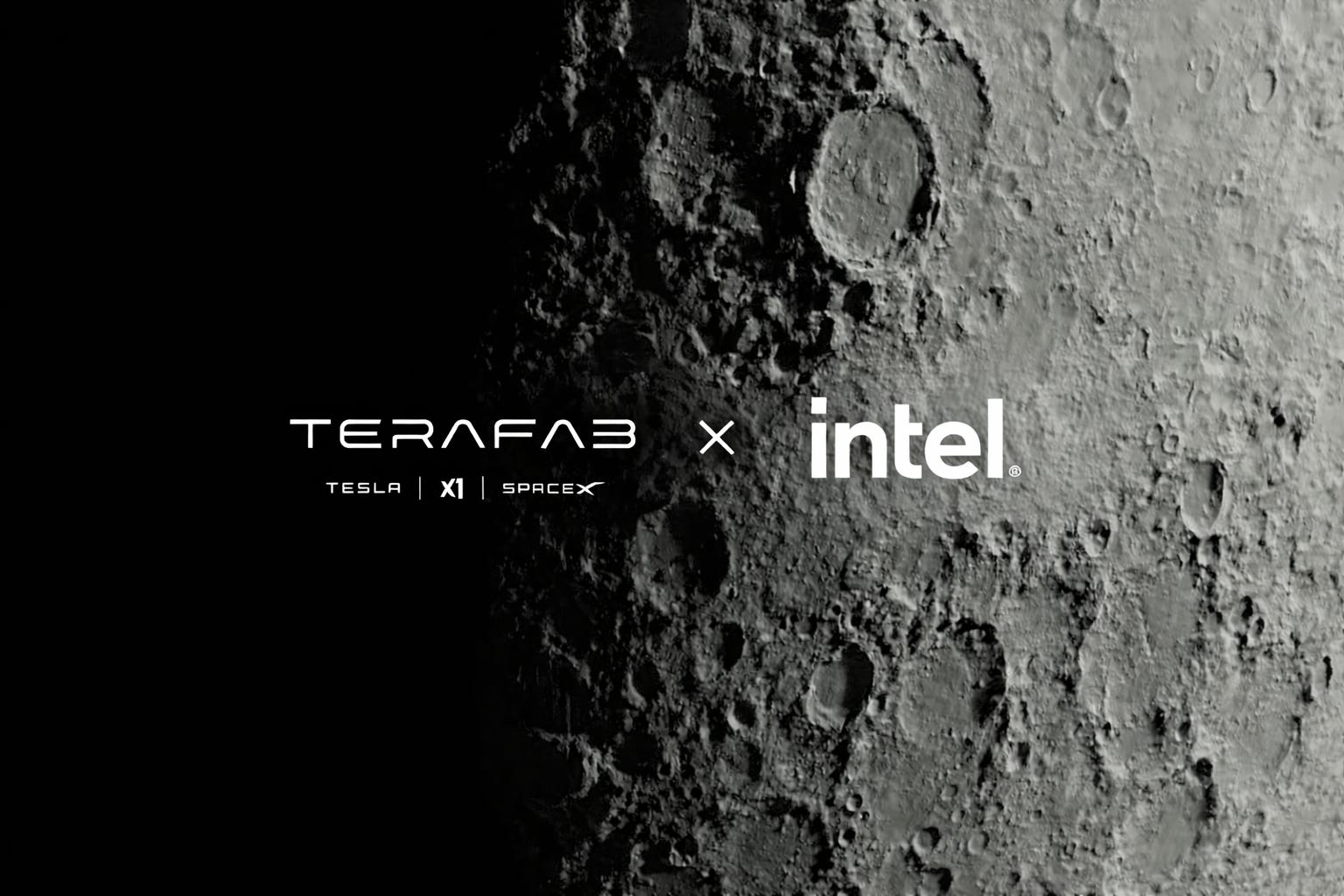
On April 7, Intel announced it would join the Terafab project as the foundry partner, alongside SpaceX, Tesla, and xAI. Musk had unveiled Terafab on March 21 at the defunct Seaholm Power Plant in Austin, calling it “the most epic chip-building effort ever.” The pilot facility is targeted at $20-25 billion. The full-scale build, according to Bernstein analysts, could cost $5 trillion.
Intel’s role: contribute its 18A process node, the company’s most advanced 1.8-nanometer logic technology, plus packaging expertise and high-volume manufacturing capability. For Intel CEO Lip-Bu Tan, who has spent the past year rebuilding Intel around an external foundry strategy, Terafab is the marquee customer the company has been searching for. Tan posted: “Elon has a proven track record of reimagining entire industries. This is exactly what is needed in semiconductor manufacturing today.”
What Terafab Actually Is
Musk’s pitch is consolidation. Every stage of semiconductor production, chip design, lithography, fabrication, memory production, advanced packaging, and testing, under one roof. The pilot facility in Austin targets 100,000 wafer starts per month using 2-nanometer process technology. The long-term goal is one million wafer starts per month and 100-200 billion custom AI and memory chips per year at the full-scale facility.
Tesla’s fifth-generation AI chip, AI5, is among the first products targeted for the pilot, with small-batch production anticipated in 2026 and volume production in 2027. The project will reportedly involve two separate facilities on the Giga Texas campus: one for automotive and humanoid robotics chips (Tesla’s Full Self-Driving system, the Cybercab robotaxi, the Optimus robot line), and a second for high-performance AI data center infrastructure and orbital deployments.
That orbital component is the part most coverage misses. SpaceX, which completed its acquisition of xAI in February 2026 in an all-stock deal valuing the combined entity at approximately $1.25 trillion, is building a constellation of space-based AI satellites internally designated AI Sat Mini. Musk has said 80% of Terafab’s compute output will be directed toward that orbital infrastructure, with the remaining 20% for ground-based applications.
Why Musk Says It Has to Exist
Musk’s reasoning, delivered at the March announcement: “We either build the Terafab, or we don’t have the chips, and we need the chips, so we build the Terafab.” He claimed all the current fabrication facilities on Earth produce only about 2% of what Tesla and SpaceX will need across their projects.
The math is staggering. The entire United States currently produces around half a terawatt of chips annually. Terafab’s terawatt-per-year target is double current US capacity from a single project. For comparison, that’s roughly 70% of TSMC’s total current global output.
Whether Musk actually needs that much compute is the central question. Tesla dissolved its Dojo D1 chip team in August 2025 and pivoted toward third-party chips. The Optimus robot timeline has slipped repeatedly. The Cybercab robotaxi program faces regulatory uncertainty. The orbital AI infrastructure depends on a Starship cadence that hasn’t yet matched Musk’s targets. The compute demand Musk is forecasting assumes all of these programs hit their projected scale, which is far from guaranteed.
What Intel Actually Brings
Intel’s announcement is thinner than the headlines suggest. The company posted on X that it would help “refactor silicon fab technology” and contribute its ability to “design, fabricate, and package ultra-high-performance chips at scale.” It hasn’t shared any more information about specifics: dollar commitments, timelines, equity stakes, or capacity allocations.
Tom’s Hardware noted the ambiguity: Musk’s framing implies a localized production facility, while Intel’s wording reads more like “a virtual semiconductor production ecosystem, or even a consortium.” How that consortium would differ from a typical wafer supply agreement is unclear.
The strategic logic for Intel is obvious. The company has spent years trying to convert its manufacturing capability into an external foundry business that competes with TSMC. Terafab, if real, is the largest customer it could possibly land. Even if Terafab never reaches its terawatt target, becoming the named foundry partner for a Musk-led semiconductor megaproject is reputationally valuable for Intel’s foundry pivot.
For Musk, the logic is equally clear. Building a chip fab is one of the most difficult corporate infrastructure projects that exists, typically requiring years and more than $20 billion for a single facility with thousands of ultra-precise machines. Tesla and SpaceX have manufacturing experience, but not chip fabrication experience. Outsourcing the actual fab construction to Intel removes the largest execution risk from the project.
The Power Infrastructure Angle
A chip is the brain. A power management system is the metabolism. As GPUs and custom AI chips push past 1,000 watts each, the bottleneck shifts from compute capability to power delivery. Every watt wasted as heat is a watt that needs to be removed by cooling systems, a watt that doesn’t reach the silicon, and a watt that constrains the overall system design.
This is the gap that Monolithic Power Systems (MPWR) fills. The company designs the high-efficiency power management semiconductors that step electricity down and stabilize it before it hits the processor. Goldman Sachs described MPWR in early 2026 as a “generational buying opportunity,” calling power management the most “under-appreciated bottleneck” in the AI supply chain.
The numbers support the thesis. MPWR posted $2.79 billion in 2025 revenue, up 26.4%, with operating income up 35.1%. Q4 2025 revenue of $751.2 million beat consensus, and Q1 2026 guidance of $770-790 million came in well above the $732 million Wall Street consensus. Management raised the dividend 28% to $2.00 per share. Enterprise Data revenue growth is now expected to be at least 50% in 2026, up from previous guidance of 30-40%. Non-Enterprise Data segments (automotive, communications, storage) grew over 40% in 2025.
The stock has performed accordingly: up approximately 90% over the past year, hitting an all-time high of $1,312.94 in early April 2026, with a market cap around $51.7 billion. The company is currently trading at roughly 54x forward earnings, a premium that reflects the growth profile and the structural position in AI power delivery.
What Actually Drives MPWR Revenue
The humanoid robotics angle for MPWR gets a lot of airtime, but it’s secondary. The company’s actual business is dominated by Enterprise Data (AI servers and data centers) and automotive 48-volt architectures. Humanoid robots are a future market that hasn’t yet materialized at meaningful volume. The current revenue and growth come from Nvidia Blackwell power modules, custom AI silicon power sockets, and EV electrification.
The bull case: MPWR is positioned to capture up to 70% market share in Nvidia’s upcoming Vera Rubin GPU platforms, which would secure revenue growth into 2028. The 48-volt architecture transition in AI servers and EVs is a multi-year tailwind. Custom silicon programs from Google, Amazon, and Meta create additional power sockets MPWR can win.
The bear case is also documented. Renesas and Infineon are gaining share in Nvidia’s digital power solutions, with Infineon projected to take 60-70% of Blackwell power management. The valuation at 54x forward earnings prices in continued execution with little margin for error. The February 27 SEC filing disclosed a restatement of 2024 and 2025 financials that creates an accounting overhang. Insider selling has been notable, including the EVP & General Counsel selling $1.58 million on April 1.
The Terafab connection to MPWR is indirect. Terafab is years away from production at scale, even in optimistic scenarios. Musk has missed timeline projections on most major hardware programs. MPWR’s near-term revenue depends on Nvidia, hyperscaler custom silicon, and automotive markets, not on whether Tesla’s Optimus robot ships in volume. The “robots need power management chips” argument is true but doesn’t drive the next two years of MPWR revenue.
The Structural Story
What Terafab actually represents, regardless of whether the terawatt target is ever achieved, is the latest signal that AI compute demand is being treated as a national infrastructure problem rather than a market problem. Hyperscalers are building gas plants. Anthropic is launching Project Glasswing with twelve named partners. Nvidia is committing to Vera Rubin architecture. Oracle is firing 30,000 people to fund $50 billion in capex. Musk is proposing a single chip facility larger than current US production capacity.
The AI infrastructure buildout is happening at a scale that makes individual project failures less consequential than the aggregate spending pattern. Even if Terafab never reaches its targets, the partners involved will build something. Even if MPWR loses share to Renesas and Infineon, the total addressable market for high-efficiency power management is expanding faster than competitive shifts can erode any single player’s position.
The investment question for MPWR is not whether the AI infrastructure buildout continues. It’s whether MPWR maintains its premium positioning against competitors who are now actively contesting its sockets. The answer depends on execution against the Vera Rubin design wins, the 48-volt architecture transition, and whether the Q1 2026 earnings call on April 29 confirms that the Enterprise Data growth floor of 50% is demand-driven rather than reflecting customer double-ordering. That’s the data point to watch.
The 3% Letter
Few weeks ago, we started sending a free Friday email to our Substack readers called The 3% Letter. If you missed it, here is what it is and why we think it is worth your time.
Every morning, we cover tech, AI, and the economic shifts shaping markets right now. The 3% Letter is the weekly companion to that work. Every Friday, one email that steps back from the daily noise and focuses on the handful of businesses and trends that actually matter for long term wealth. Not market predictions. Just a calm, clear look at what moved, what it means, and what is worth paying attention to.
We started it because 30 years of research taught us something that most of Wall Street still gets wrong. The game is not about finding more ideas. It is about knowing which ones to ignore. That is a hard thing to do alone, and The 3% Letter is designed to help.
3 minutes to read. Free. One email per week.